








.png)























.png)


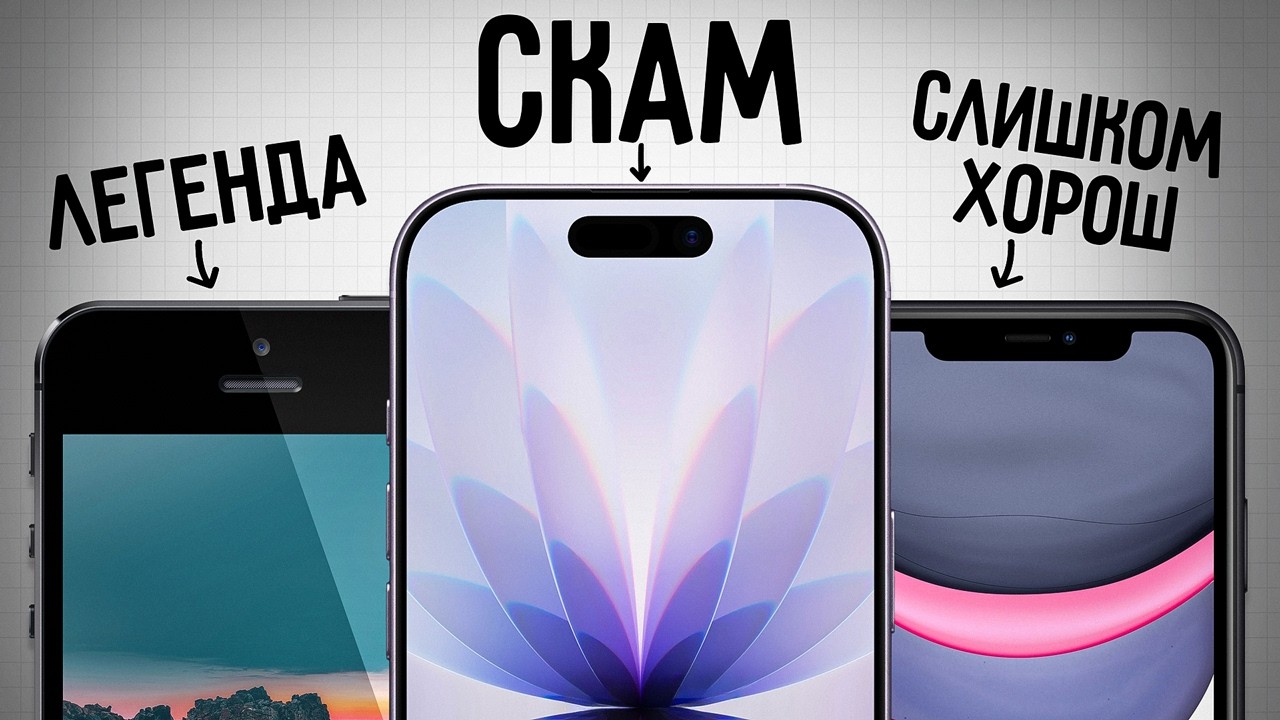
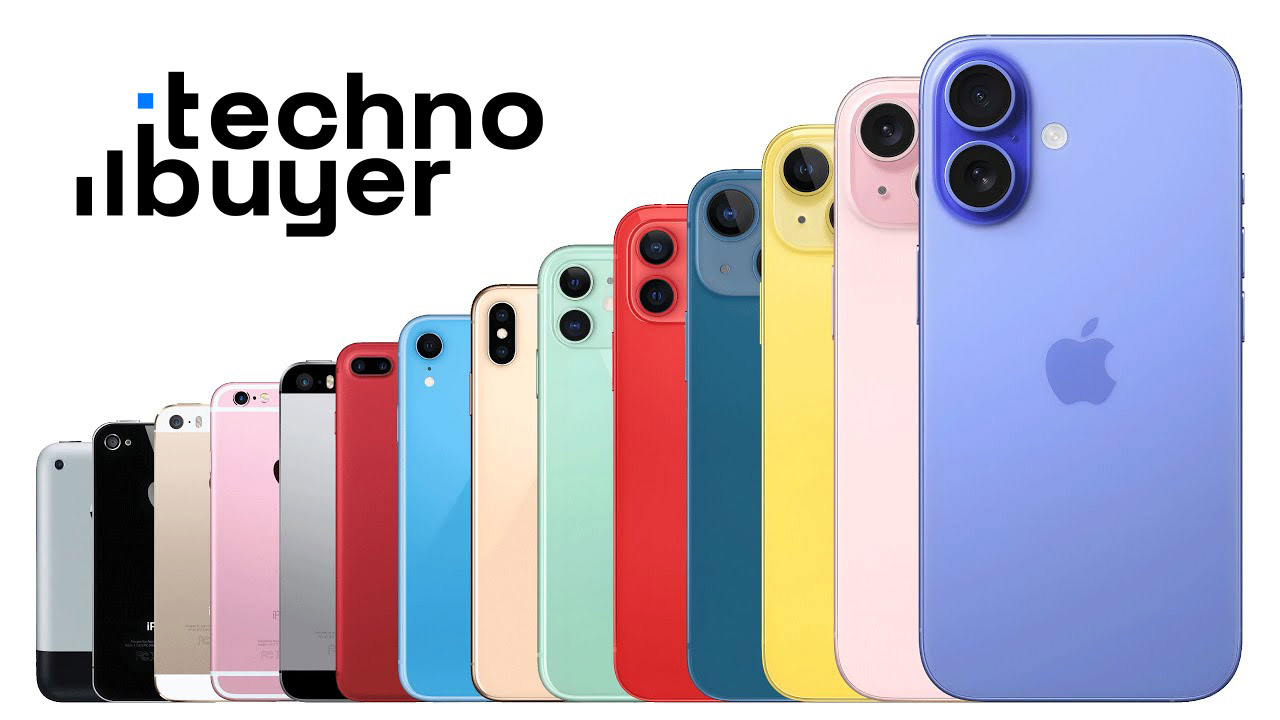
Over 17 years, Apple released 17 base iPhones. Seventeen phones — each with its own story, reputation, and place in users' memory. Some models completely revolutionized the smartphone market, some became genuine embarrassments for the company, and others passed by unnoticed despite formally existing.
We break down the entire journey of the base iPhone lineup — from the first brick without an App Store to the 2025 model that finally matched the Pro version.
iPhone. 2007
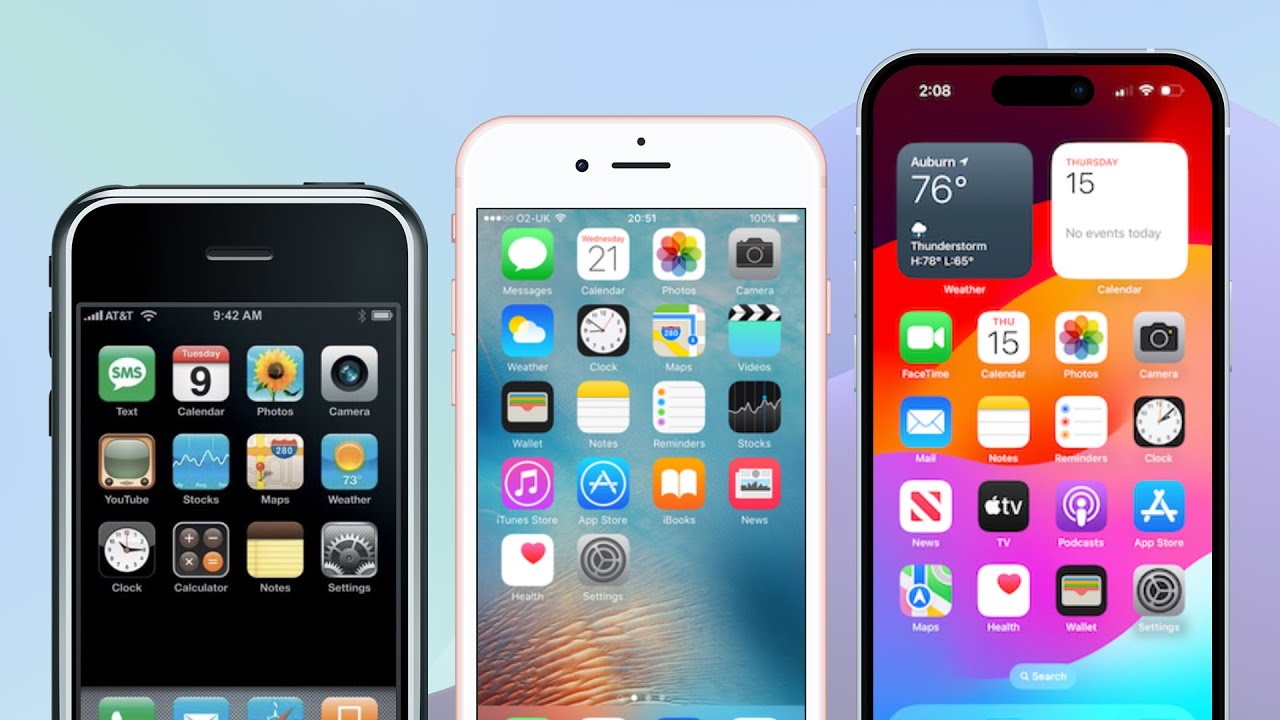
By today's standards, the first iPhone is simply a brick. A 2-megapixel camera without flash or video, no 3G, no App Store, and not even a basic copy-text function.
But this phone showed the world a fundamentally new idea: a smartphone can replace a computer and fit in your pocket. A full Safari browser, an on-screen keyboard without a stylus, finger multitouch — where competitors offered poking at the screen with a Nokia or Palm stylus. There were tons of little things, and together they changed the industry. The first iPhone deservedly holds legend status.
iPhone 3G. 2008
A year later, Apple fixed almost all the first model's shortcomings. The iPhone 3G got 3G connectivity, GPS, corporate email support, and most importantly — the App Store opened with five hundred apps at launch.
The price also dropped by half: from $500 for the first model to $200 for the 3G — the most aggressive price move in Apple's history. There were downsides too: the plastic back scratched from a single glance, and the battery died by midday. But it was the 3G that turned iPhone from a geek toy into a mass-market product.
iPhone 3GS. 2009
The S in the name stood for speed. The design stayed the same, but the hardware got noticeably faster — a similar story repeats with every new iPhone generation to this day. Video recording finally appeared, albeit in 480p resolution — though YouTube didn't deliver more back then either.
The 3GS is a solid workhorse without revolutions, but with an honest set of improvements.
iPhone 4. 2010
This model is a genuine masterpiece, and it's hard to argue even with the most skeptically-minded competitor fans. Steve Jobs personally called the iPhone 4 the biggest leap since the original.
Completely new design: glass back panel, stainless steel frame. Even today, if you hold an iPhone 4, it feels premium. The Retina display appeared for the first time — a screen where you physically can't distinguish individual pixels. After it, looking at old displays was literally unpleasant. The front camera also debuted here — not for selfies, whose culture was born slightly later as a side effect, but for FaceTime video calls.
iPhone 4S. 2011
The last model Steve Jobs managed to present: the presentation took place on October 4, and the next day he was gone. Because of this, the community treats the 4S with special, almost sentimental feeling.
The design stayed the same, but inside came Siri — the first voice assistant on a smartphone. Today many find such features annoying, but back then it looked like a genuine breakthrough. Plus an 8-megapixel camera and iCloud. A device that broke nothing and slightly improved everything, but is remembered primarily for its release date.
iPhone 5. 2012
The first model under Tim Cook's leadership — and the first thing he did was increase the screen from 3.5 to 4 inches. The body became aluminum, the phone got lighter, 4G support was added, and the wide port was replaced with compact Lightning. By the way, Lightning lived in the lineup for 11 years — until USB-C arrived in 2023.
A solid, well-built model without loud innovations, but with a confident set of improvements across all fronts.
iPhone 5S. 2013
Two important moments here. First — Touch ID, the fingerprint scanner that literally every smartphone manufacturer then copied. Second — the world's first 64-bit processor in a mobile device, which left Qualcomm chasing Apple for almost a year.
Simultaneously, the budget 5C model was released — colorful, plastic, which the public initially took as a joke. It sold poorly and quickly disappeared from the lineup, although today similar design is back in fashion. But it doesn't count toward the base flagship line. The 5S itself remains one of the best compact iPhones in history.
iPhone 6 and 6 Plus. 2014
This is where the era of big screens at Apple began. The company previously insisted that 4 inches was the limit for comfortable finger control. But seeing Samsung selling devices the size of a shovel, Apple decided not to fall behind. Thus versions at 4.7 and 5.5 inches appeared.
Rounded edges, thin body, protruding camera bump that everyone hated the first year and then got used to. This is the best-selling iPhone model in history — and simultaneously the most scandalous. Remember Bendgate? The body was so thin it bent right in a jeans pocket. Apple first denied the problem, then quietly reinforced the frame in the next model.
iPhone 6S. 2015
Formally the same 6, but with a reinforced body that no longer bends. 3D Touch was added — pressure-sensitive screen pressing — which the company later quietly buried: users barely noticed the feature.
The main attraction was the rose gold color — it was the one buyers hunted for worldwide.
iPhone 7. 2016
Here Apple took a step it's still cursed for: removed the 3.5mm headphone jack. The official reason — a push toward wireless technology. AirPods hit the market at the same time, which explains a lot.
Water resistance, stereo sound, and a noticeably improved camera also appeared. The phone itself turned out fine, but it was after the seventh model that users started saying "it used to be better."
iPhone 8. 2017
The most forgotten iPhone in history — and that's not a value judgment but a fact. On the day of the 8's release, Apple also presented the iPhone X, and everyone instantly forgot about the 8.
Hardware-wise, wireless charging and a slightly faster processor appeared — expected improvements for a new model. But the design stayed from the 6 for the third year in a row, and the public was frankly tired of waiting for change.
iPhone X. 2017
Apple deliberately skipped the number 9 to mark the iPhone's tenth anniversary with a symbolic name. This model set the template the company lives by to this day.
The Home button disappeared — replaced by gestures. The notch appeared at the top, which everyone criticized, and a year later almost all Android manufacturers copied. OLED screen, Face ID instead of fingerprint — which, rumor has it, Apple plans to return to. The iPhone price first broke the $1,000 mark.
iPhone 11. 2019
After the innovation-packed X, Apple took a breath and made a simply very good phone for a broad audience. The same A13 chip as in the Pro version, plus a night shooting mode. Wide and ultrawide cameras without a telephoto — but for most users, its absence isn't critical.
One of the longest-lived models in history: many owners still use it without any complaints.
iPhone 12. 2020
The pandemic year brought two controversial news. Apple removed the charger from the box under the pretext of environmental care — and at the same presentation showed MagSafe, which of course is sold separately.
Hardware-wise — the first base model with 5G support and ceramic glass. The design changed again: flat edges returned like the 5's, and that's a plus. The iPhone 12 mini appeared in the lineup, loved for compactness but later closed due to low sales — a pity, the form factor was successful. A middle-of-the-road model overall: good hardware without revolution and an unpleasant aftertaste from the charger situation.
iPhone 13. 2021
Essentially, a fixed version of the 12. Better battery, better camera, base storage grew from 64 to 128 GB. Neither fish nor fowl, as they say — a phone without obvious failures but also without memorable features.
iPhone 14. 2022
The worst base model in a long time. New name, but essentially the same 13 in front of the buyer: nearly the same chip, same design, nearly the same camera. New features — emergency satellite calls and crash detection, and that's it.
The whole internet mocked this model, and quite fairly.
iPhone 15. 2023
After the 14's failure, Apple seemed to apologize to the audience — and it turned out convincing. Dynamic Island finally reached the base lineup. The camera grew from 12 to 48 megapixels. And most importantly — after 11 years of Lightning, the base model got USB-C.
The only downside — no 120 Hz screen refresh rate, though in 2023 that already looked outdated. Nevertheless, one of the best models of recent years.
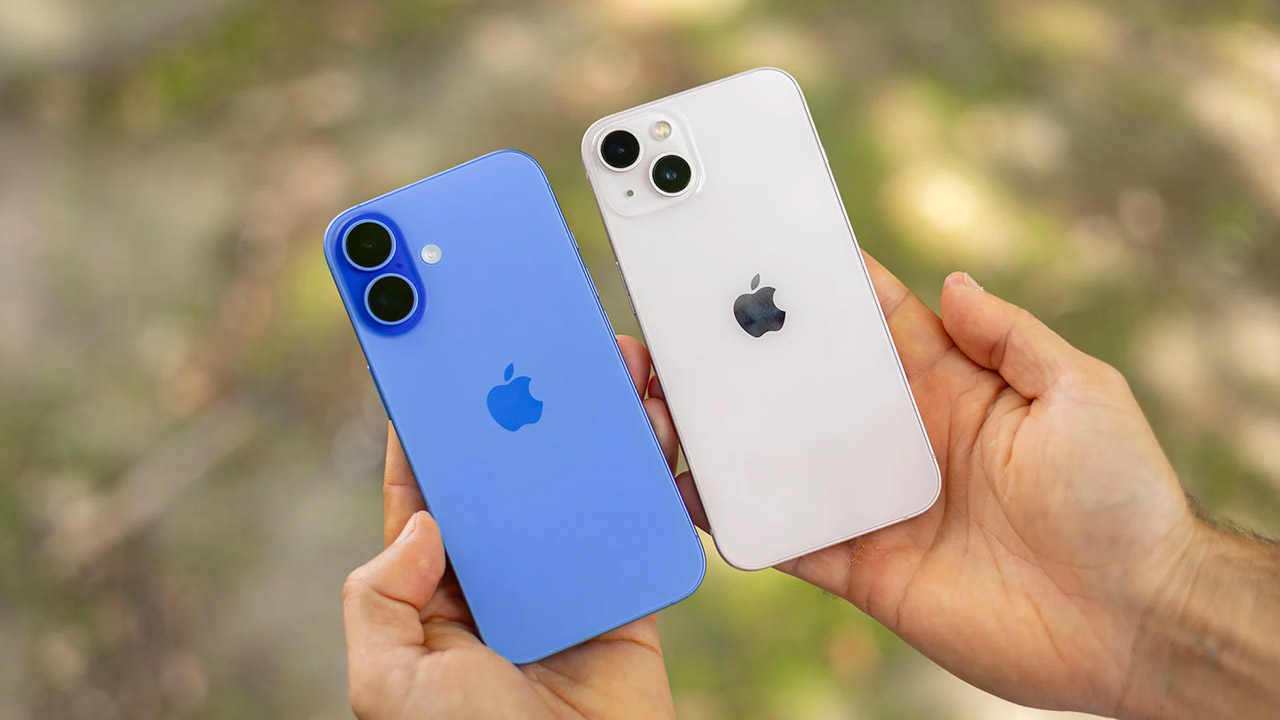
iPhone 16. 2024
Big redesign of the camera block, new Control button, the Action button migrated from the Pro line to the base model. Hardware overall is excellent.
But in autumn, a scandal erupted around Apple Intelligence. The company advertised the 16 as an AI phone, promised many features, and invested billions in marketing — then delayed or outright cancelled most promised capabilities. Buyers who chose the model specifically for AI were left with a regular, albeit quality, smartphone. Today, buying an iPhone 16 seems impractical: the market already has the iPhone 17 — the same phone but better across all parameters.
iPhone 17. 2025
iPhone 17 at great prices


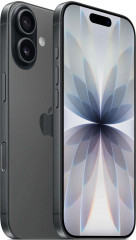





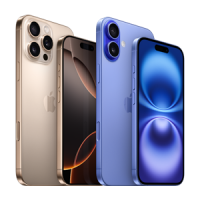
The current base model, and its main achievement — for the first time in a long while, it nearly matches the Pro version.
The 120 Hz screen refresh rate finally appeared, even though comparable Android flagships offered it years ago at significantly lower prices. The camera is improved, battery holds well, the processor works fast. For buyers not ready to overpay for the Pro line, the iPhone 17 is the best choice in years: it delivers everything users waited years for.
Similar logic applies to more expensive models: comparing the iPhone 17 Pro Max and iPhone 16 Pro Max shows that the gap between generations is shrinking, and an upgrade isn't always justified.
Summary: Who Earned a Place in History
Sorting 17 models into categories is simpler than it seems.
- Legendary models: the first iPhone, 3G, 4, X, and 11, 15, and 17.
- Solid workhorses: 3GS, 4S, 5, 5S, 6S, and 13.
- Controversial but significant: 6 with Bendgate, 7 without a headphone jack, forgotten 8, 12 without a charger, 16 with the AI scandal.
- The most unsuccessful model in the lineup's history: iPhone 14.
The history of the base iPhone lineup is an alternation of bold steps and obvious missteps, but in 2025 Apple finally packed into one model nearly everything that previously went only to Pro owners. Current iPhone models of various generations, including the new iPhone 17, are available in the catalog of our online store.
0 comments