








.png)














.png)


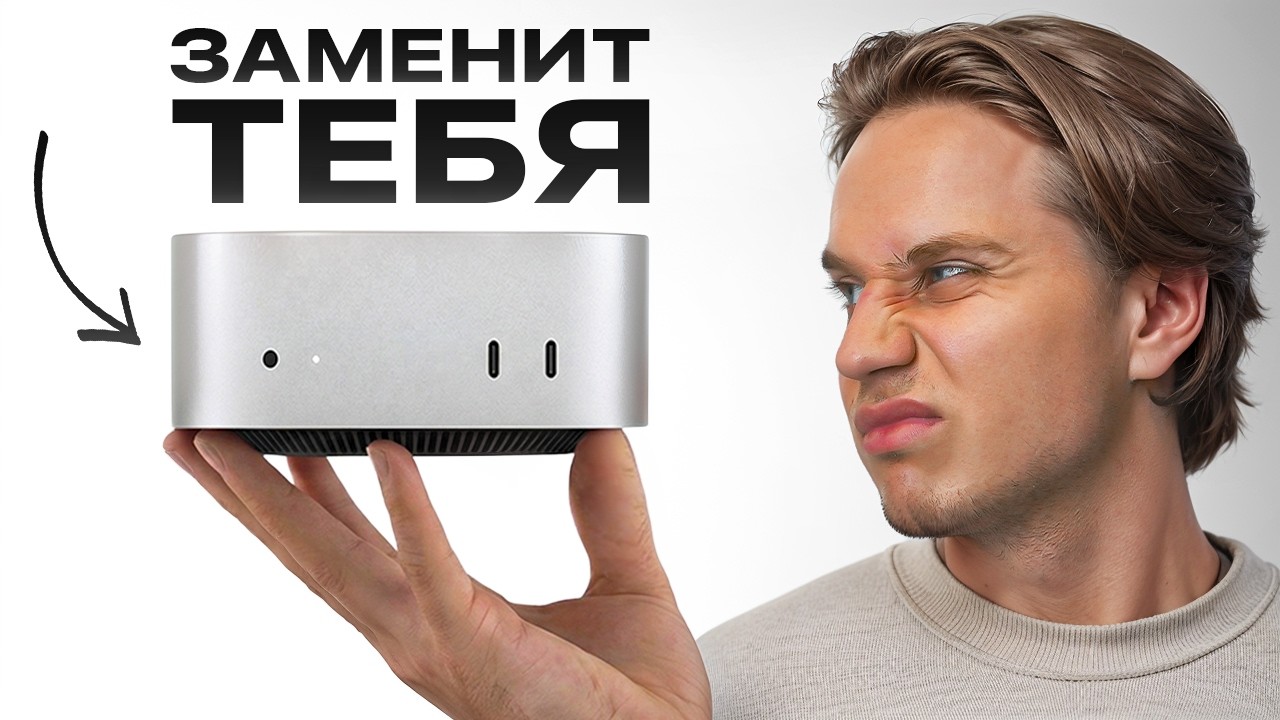
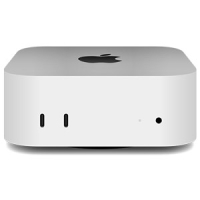
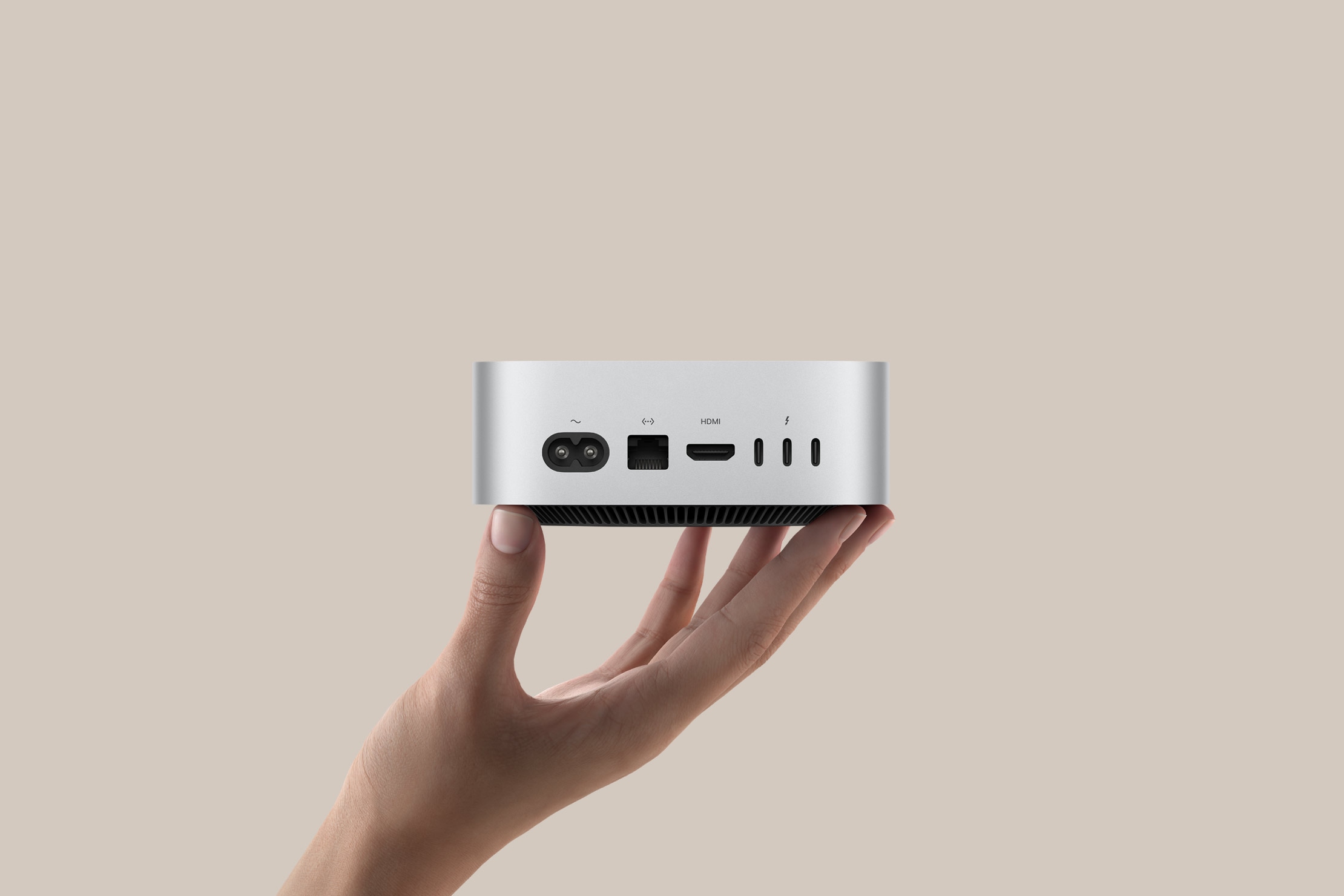
Apple's compact desktops are disappearing from warehouses worldwide. Users are ordering with delivery from other countries, resellers are inflating prices, European retailers report empty shelves. It sounds anomalous. The Mac Mini has historically been a niche product. Students, frugal freelancers, or corporate clients for equipping inexpensive workstations bought this computer. The model's share rarely exceeded one percent of total macOS computer sales. Within Cupertino, the question of whether to continue developing the lineup periodically came up.
In early 2026, the sales curve changed trajectory and went vertically up. New batches sell out within hours. The buyer audience has fundamentally changed: the device is being mass-purchased by developers, entrepreneurs, and AI enthusiasts. Below is a detailed breakdown of what's happening on the market, an analysis of the hardware advantages of the most compact Mac, and an explanation of how the new trend is rewriting the rules of the labor market right now.
Mac mini at great prices


Hardware: The Long-Awaited Shift in Base Standards
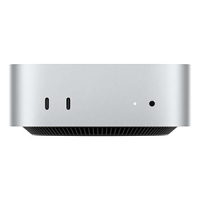
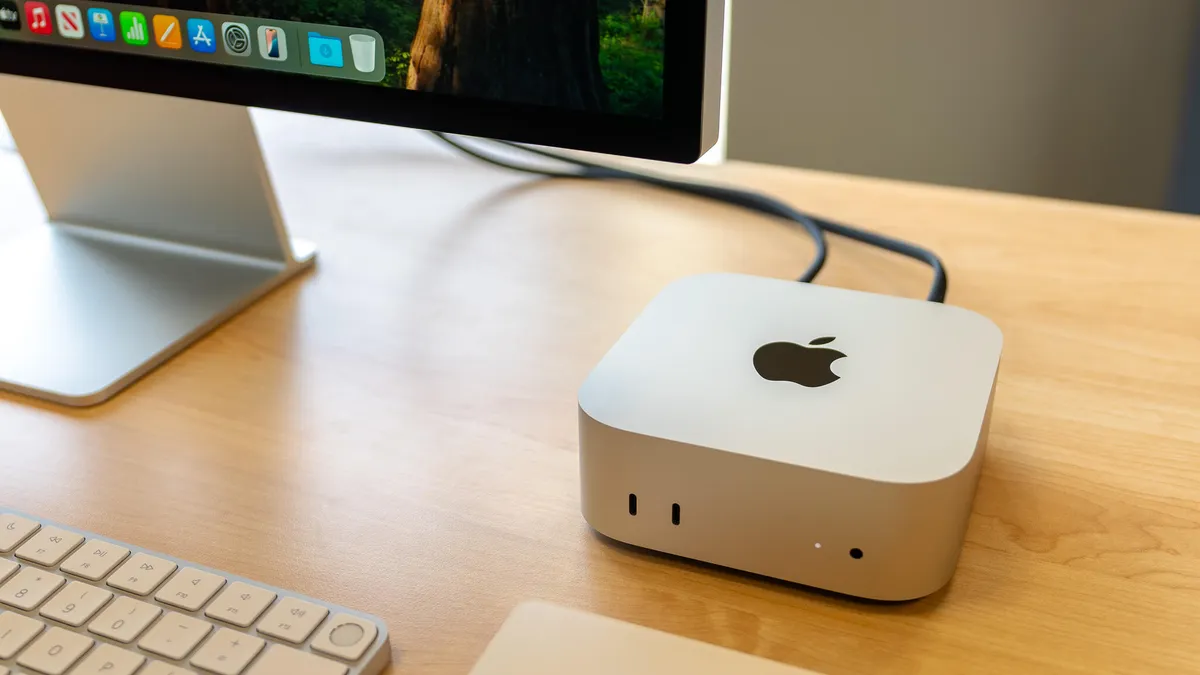
The main driver of demand is hidden in the updated configuration. The base Mac Mini with the M4 chip costs roughly 2,200 AED. For the first time, the starting configuration of an Apple computer begins not with the archaic eight gigabytes, but immediately with sixteen gigabytes of RAM. For $599, the buyer gets a powerful workstation with a current-generation processor and enough memory to run heavy neural network models.
Apple's generosity with base memory could have provided a small local sales bump. However, the real reason for the total deficit lies not in the hardware itself, but in the software that runs on it. Users realized: this is the ideal server for local artificial intelligence.
Open Claw: The Birth of the Personal Digital Employee
The sharp spike in interest in the Mac Mini coincided with the release of Open Claw — a framework for working with autonomous AI agents. To grasp the scale of changes, it's necessary to clearly distinguish between classic neural networks and agent systems.
A classic language model like ChatGPT or Claude works in a dialogue format. A person writes a request — the neural network gives a text response. You ask for a script — you get a piece of code. Then the routine begins: the user manually copies the text, pastes it into an editor, runs the execution environment, catches errors, returns to the chat, and asks the neural network to fix the bugs. All mechanical work, quality control, and integration remain on the person's shoulders.
The agent approach in Open Claw changes the paradigm. The system works in a goal-achievement format. A person describes the final result, and the agent independently breaks the path into small steps and executes them. The machine creates files on disk, writes code, runs scripts through the terminal, analyzes system errors, and rewrites problematic sections until full success. The user acts exclusively as the task setter and receiver of the finished result.
In professional circles, the process received the unofficial name "vibe-coding." The developer only sets the general direction, forms the "vibe" of the future product, and the autonomous program handles the routine implementation.
Apple Silicon Architecture: Three Reasons to Choose Mac Mini
If an AI agent can be run on any platform, a natural question arises: why are developers hunting specifically for Apple's compact computers? Why not build an inexpensive Windows PC? The reason lies in deep architectural differences of Apple Silicon chips. The choice is driven by three critical factors.
Unified Memory
In classic computers with Intel or AMD processors, data constantly travels between the motherboard's system RAM and the discrete graphics card's VRAM. Transferring information over the PCIe bus takes fractions of a second, but when working with the enormous data arrays of neural networks, the delays add up and become critical. Apple's architecture is fundamentally different: the CPU and graphics core use a single pool of memory. No copying files back and forth. Local language models run at maximum speed precisely because the data transfer bottleneck is eliminated.
Hardware Acceleration (Neural Engine)
The M4 chip is equipped with a specialized Neural Engine block, whose performance reaches 38 trillion operations per second (TOPS). The compute cores are designed exclusively for the matrix calculations neural networks need. Request processing goes several times faster compared to universal desktop processors from competitors.
Radical Power Efficiency
A digital agent must be available round the clock. The Mac Mini in idle consumes 5–7 watts. A standard Windows system block with a powerful graphics card will consume 30–50 watts even without active load. If the computer works as a 24/7 server, the difference in electricity bills becomes substantial.
The economics of building a PC for similar tasks look daunting. To get 16 GB of VRAM for locally running a large language model on Windows, you'd need to buy a graphics card at the RTX 4080 level. A single graphics card like that costs more than the entire Mac Mini. Instead, Apple offers a ready system for about 2,200 AED.
The pragmatic business calculation: Mac Mini plus the free Open Claw framework equals a round-the-clock employee. The system runs locally, data doesn't leak to the cloud, there's no subscription fee for third-party API tokens. The hardware pays for itself in a few months.
Where Did Three Trillion Dollars Evaporate To?
Mass adoption of autonomous agents hits established business models. In February 2026, a telling crash occurred on the stock market: SaaS company stocks (developers of subscription-based cloud software) plummeted. The sector's total capitalization dropped by three trillion dollars in one month.
The cause isn't a global economic crisis. Investors realized the looming threat: the value of ready-made cloud software is heading toward zero. If any entrepreneur can spend an evening tasking a local agent with developing an internal CRM system, project management tool, or form builder, there's no point in paying $50–$200 monthly for someone else's services.
It's more profitable for a business to buy a Mac Mini for the office, launch Open Claw, and have the agent write software for the company's specific needs. No subscriptions, no third-party logos, full independence, and ideal adaptation to internal processes.
Agentic Engineering: The End of the Manual Programming Era
If one person with a digital assistant does the work faster than an entire department, the consequences for the labor market are inevitable. The analytical agency Gartner recently published a harsh forecast: by the end of 2028, 75% of new commercial code will be generated by neural networks. By 2030, the vast majority of programmers will stop writing code by hand.
The IT specialist's role is transforming. The developer turns from an engineer-executor into a manager of digital subordinates. The industry has already coined the term "agentic engineering" for the process. One person orchestrates the work of several algorithms, sets tasks, checks architecture, and delivers the finished product. Companies will hire fewer line executors, redistribucing budgets toward strong "orchestrators."
Instead of five juniors and two mid-level developers, a business will hire one experienced engineer with a farm of several Mac Minis. Efficiency increases, payroll costs decrease several times over.
Impact on Adjacent Professions: Who's Next
The ongoing revolution affects far more than just programmers. Copywriters, analysts, designers, project managers, marketers — representatives of any profession where routine computer work exists are under direct threat of automation.
Vibe-coding allows automating the creation of landing pages, parsing competitors' databases, mass personalized email campaigns, collecting weekly analytics from scattered Excel spreadsheets. Tasks that previously required bringing in specialized professionals or buying expensive services are now closed with a single prompt to a local neural network.
If job responsibilities can be broken down into a clear algorithm of steps, the work will be automated. The process is happening right now, before our eyes.
Mac mini at great prices
The Bottom Line: A New Survival Tool
The deficit of Apple's compact computers is a clear indicator of how incredibly fast business is adapting to the new rules of the game. Buying a Mac Mini M4 today has ceased to be the acquisition of an ordinary home PC. The machine has become the most affordable ticket to the world of local AI and independence from paid cloud subscriptions.
The verdict is harsh: the market will no longer pay for mechanical routine. Either a specialist learns to masterfully delegate tasks to autonomous agents, multiplying their own productivity many times over, or algorithms will steadily take their job. The hardware base for the transition to a new level is already on store shelves. It remains only to acquire it in time and start using it as intended.
0 comments