














.png)




































.png)


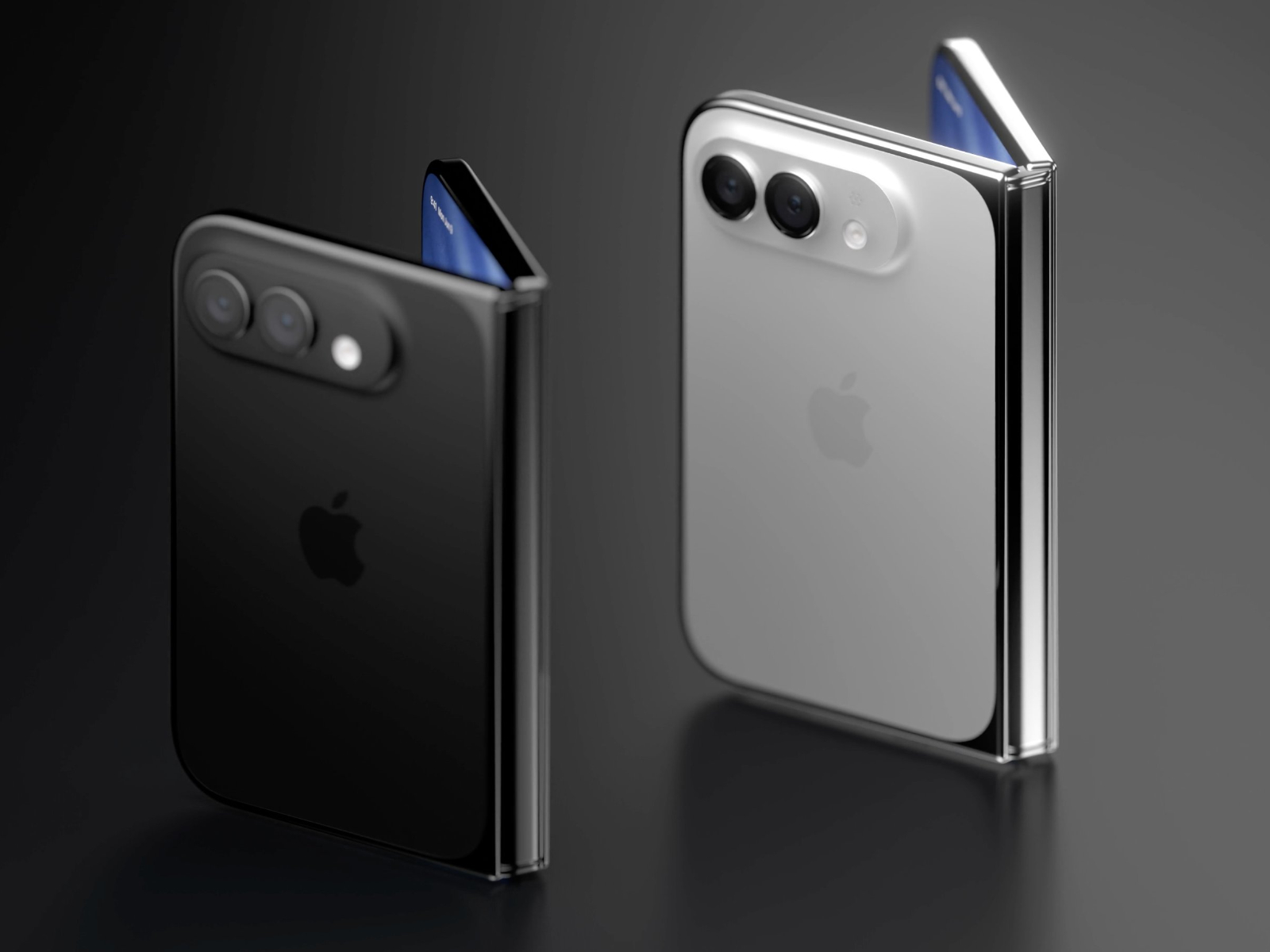
September 2026 could change what the smartphone market looks like. Apple is preparing to unveil the first foldable iPhone — and based on current reports, this isn't just another flagship with a new chip. Different mechanics, different usage logic, and a price that will make even the most devoted brand fans think twice.
Design: Passport Instead of a Book
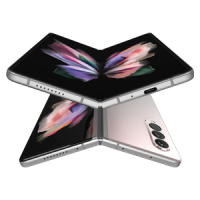
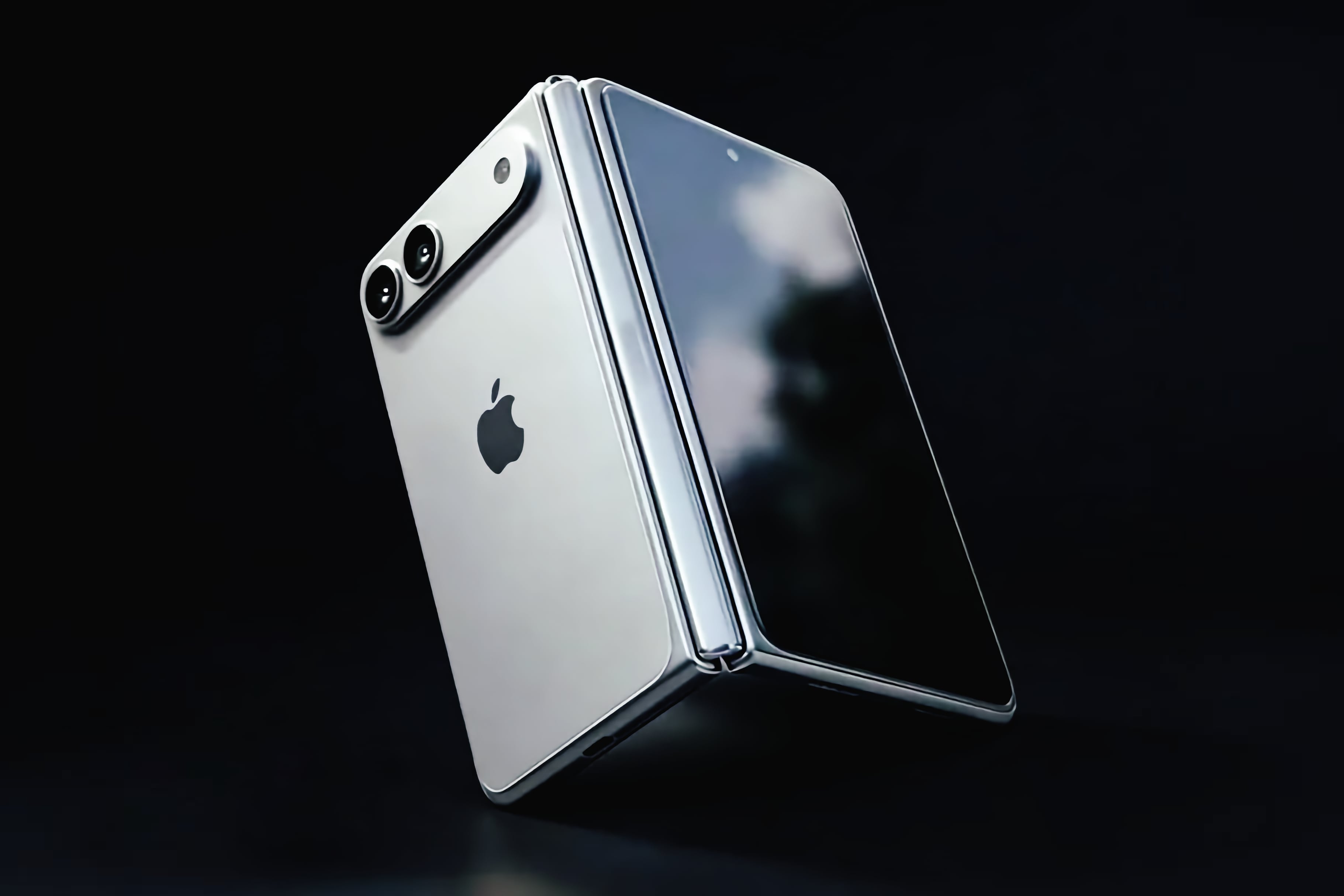
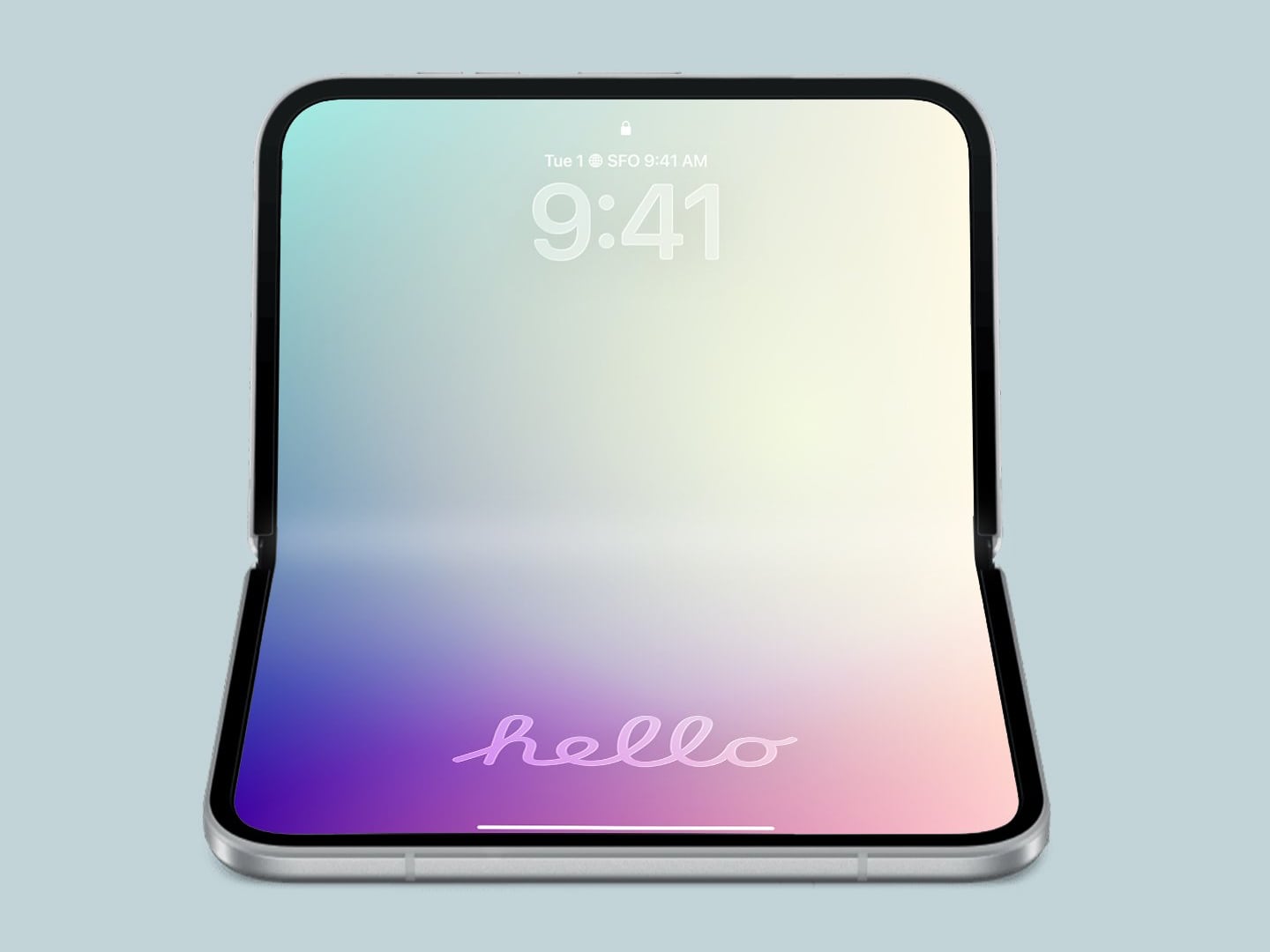
The iPhone Fold folds in a book-style manner — like the Samsung Galaxy Z Fold or Google Pixel Fold. But Apple chose wide body proportions, and the device resembles a passport in shape. The wide outer screen in folded form is more convenient for typing than the narrow strip on competitors.
Unfolded, the iPhone Fold becomes a tablet with a 4:3 aspect ratio — almost like an iPad mini. 7.76 inches that fit in a pocket.
Body thickness:
- Folded — 9–9.5 mm. About like an iPhone 17 in a thin case
- Unfolded — about 4.5 mm
The body is aluminum and glass, the hinge is titanium. Colors — white and black. No color palette experiments: the foldable flagship is positioned as a business tool, not a flashy accessory.
Hinge: The Engineers' Main Bet
The hinge will be made of Liquidmetal — an amorphous alloy based on zirconium, titanium, and copper. Apple has owned exclusive rights to this material in consumer electronics for 15 years, but until now only used it in small parts like the SIM card tray. Now — the main node of the device.
Amorphous alloys have no crystalline structure, making them 2.5 times stronger than titanium with high elasticity. The hinge returns to a flat position after hundreds of thousands of folding cycles — without play or deformation. Some hinge parts are 3D-printed for precise geometry.
Competitors' hinges start to spring or develop play over time. Apple solves this problem at the material level.
Displays: Finally Without a Crease?
The crease on the screen is the main pain point of the entire segment. On Samsung, it's visible and felt with your fingers during interaction. Apple spent years solving this problem.
The displays are made by Samsung Display to individual order. The inner display will receive CoE (Color Filter on Encapsulation) technology — a layer of color filters that increases brightness and panel flexibility. Additionally, optically clear adhesive (OCA) is applied, which distributes load during bending and reduces the visibility of the crease.
| Inner | Outer | |
| Diagonal | 7.76–7.8" | 5.5" |
| Resolution | 2713 × 1920 | 2088 × 1422 |
| Refresh rate | 120 Hz | 120 Hz |
Both displays are 120 Hz. On some competitors, the outer screen runs at a lower refresh rate.
Internals: Pro-Level
The iPhone Fold will get the A20 Pro chip — the first mass-market mobile processor on a 2-nanometer process. Performance 15% higher than the A19 Pro, power consumption 30% lower. In practice — longer battery life and a cooler body under load.
RAM — 12 GB LPDDR5X. This is more than in the iPhone 18 Pro. Storage configurations: 256 GB, 512 GB, 1 TB, possibly 2 TB.
Battery: Record for an iPhone
5,500 mAh — no iPhone has ever had this capacity. Apple didn't split the battery into two parts as competitors do: a single battery occupies one half of the body, on the other — the motherboard and electronics.
Charging speed — 30W. The limitation is deliberate: the thin body dissipates heat poorly, and fast charging would overheat it.
Cameras: The Main Compromise
The 4.5mm thickness physically leaves no room for a telephoto lens. The camera system is two modules:
- Main wide-angle — 48 MP
- Ultrawide-angle — 48 MP
Zoom is 2x, but digital, via crop from the 48-megapixel sensor. For professional shooting, this is a noticeable limitation. For everyday scenarios — tolerable.
There are two front cameras: 24 MP each — one on the inner screen, one on the outer. Apple considered an under-screen camera for the inner display but abandoned it: night shooting quality in this format doesn't yet reach an acceptable level.
What Won't Be There
The foldable form factor required sacrifices. The list is specific:
- Face ID — no room in the body. Instead, Touch ID in the power button. Dynamic Island remains
- MagSafe — recent leaks indicate its absence due to body design features. Without MagSafe — wireless charging is also in question
- Physical SIM slot — eSIM only, as in the iPhone Air
- Action Button — possibly won't be there. All buttons are concentrated on the right edge to avoid running cables through the entire body
Software: iOS with Tablet Logic
The iPhone Fold will run iOS with significant modifications. System apps will get sidebars in the iPadOS style. Split View will appear — two apps running simultaneously on the large screen. A full windowed mode like on Mac or iPad Pro won't be available.
Developers will get special APIs for adapting apps to the flexible screen. Without proper support from them, the large display simply becomes an enlarged version of the standard one — and the point of the foldable form factor is lost.
Price: The Most Expensive iPhone in History
Analyst forecasts vary, but all name sums the iPhone has never had before:
- UBS: $1,800–$2,000
- Bloomberg and Ming-Chi Kuo: $2,000–$2,500
- Instant Digital: $2,300 for 256 GB, $2,610 for 512 GB, $2,900 for 1 TB
Apple plans to produce 7–8 million iPhone Fold units — versus at least 100 million for the entire iPhone 17 lineup. The audience will be narrow, and Apple understands this.
The Bottom Line
The iPhone Fold comes out seven years after the first Galaxy Fold. Apple observed competitors, studied their mistakes — and now offers its answer: a liquid-metal hinge, a screen without a visible crease, the A20 Pro chip, and a 5,500 mAh battery.
The lack of telephoto, Face ID, and MagSafe are real downsides. The price is a separate barrier. This device is for those who need a smartphone and a tablet in one — and who are willing to pay for it.
The official presentation is expected in fall 2026.
0 comments