












.png)

























.png)


Tech bloggers usually pit last year's flagship against the fresh new release. The difference in such reviews must be found under a magnifying glass. Slightly better white balance, a bit less noise in deep shadows, a couple of new software tricks — that's all the progress over a year. Watching such comparisons is boring, and making a buying decision based on them is even more so.
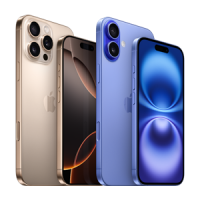
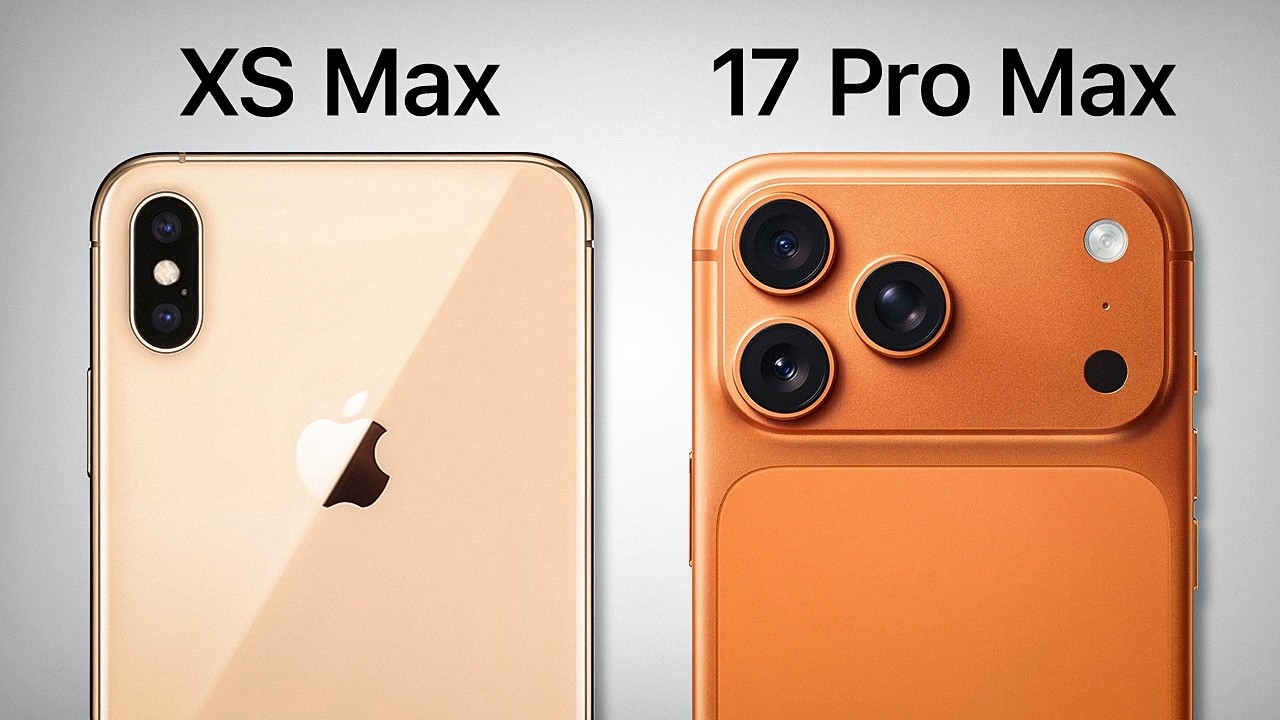
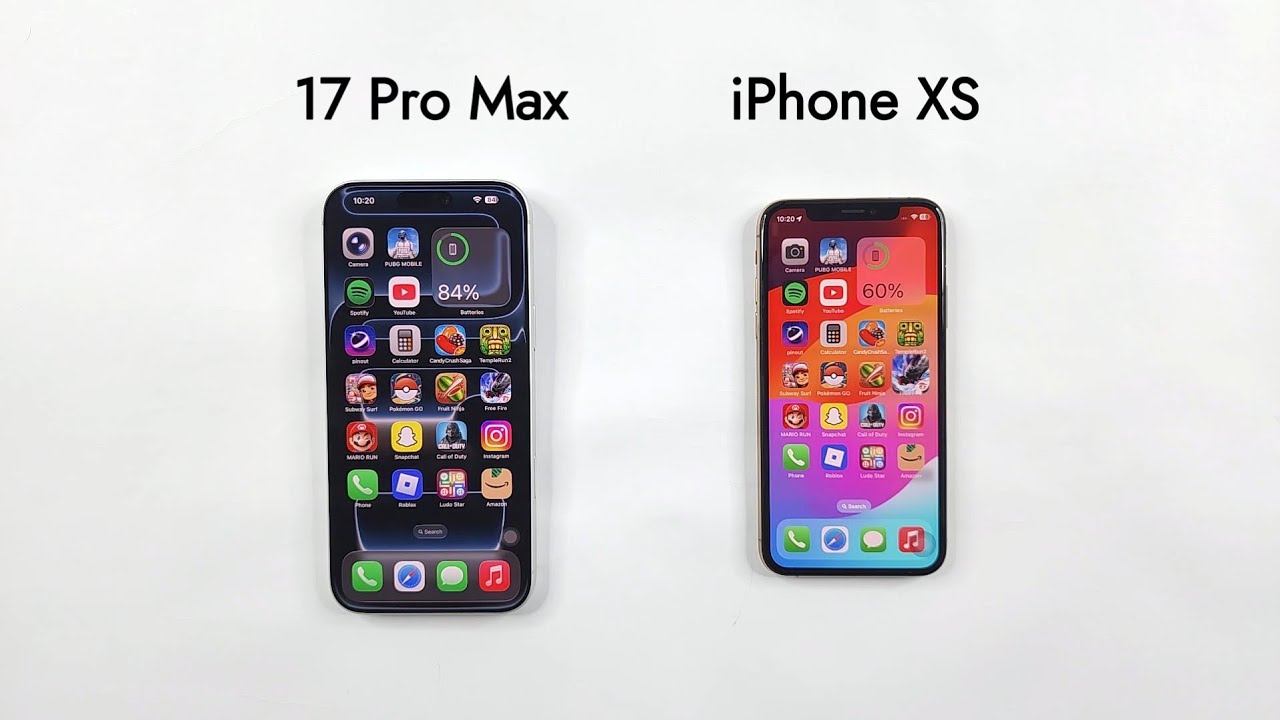
But what happens if you take an eight-year-old smartphone and compare it directly with the current flagship? How real is the technological leap that Apple engineers describe from the stage every September? To check the real state of affairs, I pulled an old golden iPhone XS Max from the desk drawer and placed the newest iPhone 17 Pro Max next to it.
iPhone 17 Pro Max at great prices





We tested the devices under identical conditions. Daylight, night street, close-up shooting, front camera, and slow-mo. The results were quite predictable in terms of the winner, but very interesting in the details. Spoiler — the differences lie far beyond just megapixel counts.
Where Did the Feeling of a Premium Monolith Go?
Before diving into camera modules, an important digression about the devices themselves. Pick up the old XS Max and you immediately feel a weighty, monolithic thing. The smartphone is heavy, the frame is made of polished stainless steel, the glass on the back seems incredibly thick. Every detail is fitted with jeweler's precision. The feeling of a genuine, uncompromising flagship comes through tactility.
Then pick up the 17 Pro Max. Dimensions are larger, the display breaks brightness records, inside works the most powerful processor. However, the body here is made of aluminum. In hand, the new device feels noticeably simpler. Previously, Apple could make devices that physically transmitted the owner's status. Now the corporation optimizes production and saves on materials even in the top Pro line. Build quality is still exemplary — no creaks or loose fits — but that "heavy" luxury feel the device no longer provides.
However, the main value of a modern smartphone lies inside. Let's move to optics testing.
Daytime Shooting and Computational Photography Wonders
On paper, the technical gap looks colossal. The new device offers four times more megapixels on the main sensor, a proper ultrawide module, and an advanced telephoto with 5x optical zoom. Let's see how physics and algorithms work in real scenarios.
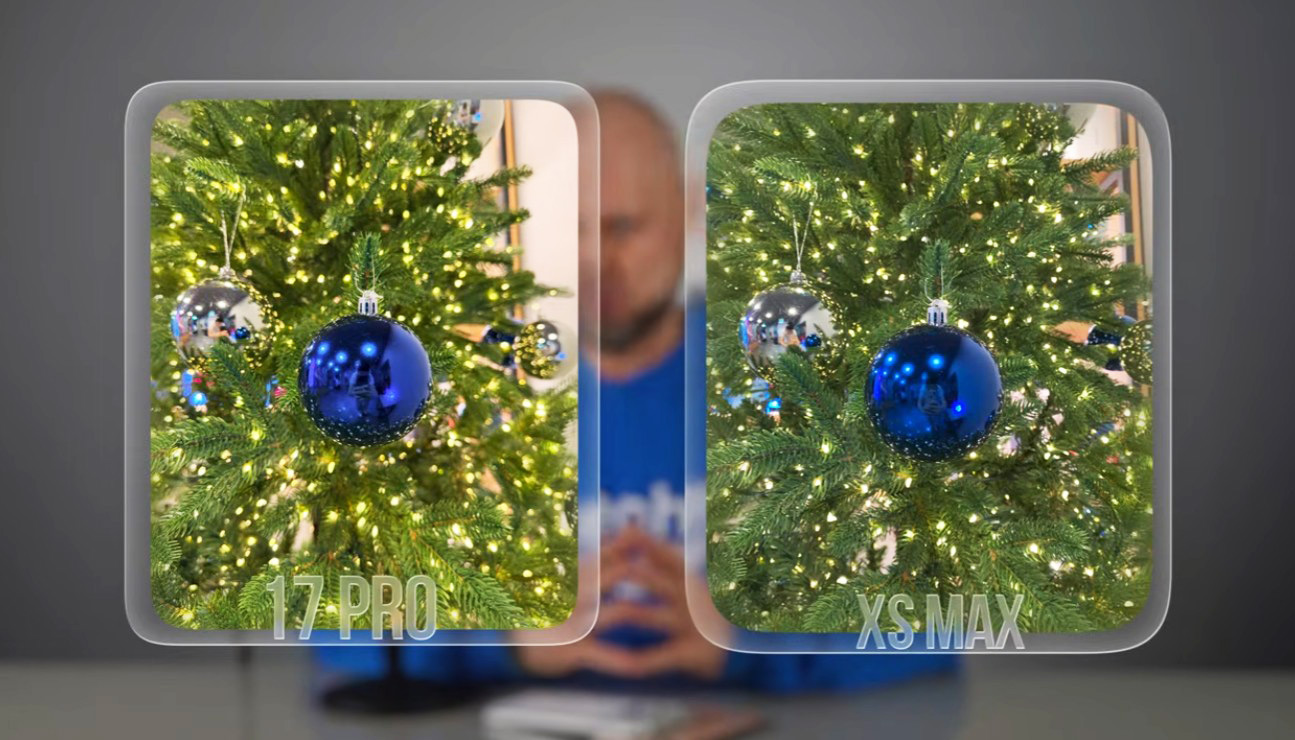
Let's start with standard shots in daytime indoor light. The old flagship delivers an acceptable image until you start looking at details. In shadows, especially in room corners, unpleasant digital grain immediately appears. Colors lack density and purity, as if a thin matte film was stretched over the lens. The new device demonstrates a completely different level of processing: shadows remain deep, noise is absent, colors look saturated and natural.
Outdoors in bright sun, the difference paradoxically disappears. Both smartphones take excellent daytime photos. Auto exposure delivers good sharpness, correct sky tones, and accurate white balance. If you view photos on the phone screen without zooming, you can't tell the difference between a shot from a thousand-dollar device and one from a 2018 device.
The old optics' magic crumbles exactly at the moment of zooming into the finished photo. On the XS Max, tree foliage merges into a single mush, brickwork loses volume, textures become flat. The 17 Pro Max, thanks to the 48-megapixel sensor, renders every leaf. Dynamic range is also on the new device's side — bright sky no longer blows out to white, and HDR algorithms carefully pull details from dark areas of the frame.
Night Tests and Physical Sensor Size
In the evening, the old smartphone openly waves a white flag. The laws of optics can't be deceived: a small sensor captures little light.
When shooting in semi-darkness, the XS Max produces a grainy mess. The image resembles a frame from a cheap digital point-and-shoot from the 2000s. Details are irretrievably blurred, colors lose saturation, parasitic tints appear. The 17 Pro Max in the same conditions maintains a clean scene. Noise is present but three times less. Algorithms don't turn people's faces into watercolor, and clothing and building textures remain readable. The large physical sensor of the new model captures more photons, which directly converts to final file quality.
Battle of Focal Lengths — From Cramped to Macro
Modern mobile photography requires versatility. Users need more than one viewing angle.
The ultrawide module on the XS Max is physically absent. Need to shoot a panorama of a narrow room or capture tall architecture — you'll have to back up until your back hits a wall. The 17 Pro Max has an ultrawide lens that not only covers the wide-angle need but also produces quality shots without strong edge distortion.
The optical zoom situation is also telling. The XS Max offers an honest 2x zoom. The module works excellently, the image is sharp, without quality loss. Further zooming is digital up to 10x, turning the photo into mush.
The 17 Pro Max has a 5x optical zoom. At this focal length, shots come out perfect — optics work without loss. Thanks to the main sensor's high resolution, cropping to 10x and 15x remains fully usable. Even at maximum 25x zoom, you can make out text on a sign, though such a shot has no artistic value.
Front Camera Saves Content Creators
The selfie camera went through a similar evolutionary path, gaining several critically important improvements for modern bloggers.
The first difference lies in the viewing angle. The old smartphone's lens is openly narrow. To fit two people in the frame, you have to unnaturally extend your arm forward. The new device has a lens with a 20mm focal length. A whole group fits in the frame without problems, the background looks great, and faces at the edges aren't distorted.
The second major innovation is automatic reframing. The user holds the smartphone vertically, and the device independently crops the frame from the square sensor into a classic horizontal 16:9 format. For recording blogs on the go, this feature turned out to be indispensable. A blogger no longer needs to twist their wrist or buy special gimbals.
Video Shooting Reaches Professional Level
Megapixels take a backseat in video. Both smartphones use the sensor in 8 MP mode for video recording. The key role here belongs to computational power and optics quality.
On the old device, 4K shooting is limited to 30 fps. The new device easily handles 4K at 60 fps. Smooth, realistic footage without strobing when panning the camera wins by a huge margin, especially when shooting dynamic scenes.
In insufficiently lit rooms, the gap becomes dramatic. The old device produces abundant digital noise in shadows, and faces are software-smoothed to a plastic mask state. The 17 Pro Max shoots crystal clean. Hair doesn't merge into a single spot, skin texture is conveyed as naturally as possible.
For professionals, the new device offers ProRes recording. Files weigh tens of gigabytes, quickly fill storage, but give boundless possibilities for color grading in post-production. Eight years ago, no one could even dream of such functionality in a mobile device.
Software Tricks Change the Game
Over the years, engineers added modes that radically change the approach to content creation.
On the XS Max, macro shooting doesn't exist. Focus is lost at 10–15 centimeters from the subject. The new device automatically switches to the ultrawide and lets you shoot subjects up close. Examine scratches on a coin, capture fabric texture, or photograph a device board for selling on a marketplace — all in a couple of seconds.
Action Mode turns the smartphone into a full-fledged action camera. Enhanced digital stabilization works in tandem with the gyroscope. You can run up stairs and the image stays perfectly smooth, as if shot with a gimbal. Algorithms slightly crop the frame edges for software shake compensation, but the result fully justifies the viewing angle loss.
Cinematic Mode adds cinematic background blur to video. Focus smoothly shifts between subjects in frame. Neural networks periodically make mistakes, clipping strands of hair or glasses temples, but for social media publication, the effect quality is more than sufficient.
The Camera Control Button Raises Questions
The main hardware innovation of the 17 Pro Max is a separate Camera Control button on the right side of the body. Pressing opens the camera app, another press triggers the shutter. Light swipes on the touch surface change zoom, exposure, or shooting modes.
On paper, the solution looks like a street photographer's dream. In reality, ergonomics leave much to be desired. The button is regularly pressed accidentally when pulling the phone from a pocket. Swipes are periodically ignored by the system, requiring repeated action. Setting focus and triggering the shutter with a familiar screen tap turns out twice as fast in many scenarios. Perhaps the usage pattern requires long muscle memory, but for now, the innovation hinders more than it helps.
Who Should Head to the Store
The progress of mobile optics over eight years is hard to overestimate. The main sensor became three times larger, the front camera expanded its viewing angle, and proper macro, a powerful telephoto, and perfect stabilization for recording dynamic scenes at 60 FPS all appeared.
For owners of iPhone XS, 11, or 12 models, the difference after buying the 17 Pro Max will seem staggering. The image will become crystal clear, noise will disappear, and creative possibilities will expand exponentially. Photos will no longer depend on the quality of external lighting.
For users of the 15 Pro or 16 Pro, running to the store solely for a new camera isn't worth it. The difference will be noticeable only when pixel-peeping a direct comparison on a large computer monitor.
If mobile photography plays an important role in your life, the 17 Pro Max offers maximum technical freedom. Today, the corporation has delivered the best tool for creating visual content on the market.
Current iPhone models, including the reviewed 17 Pro Max flagship, are always available in our online store catalog.
0 comments