





.png)







.png)


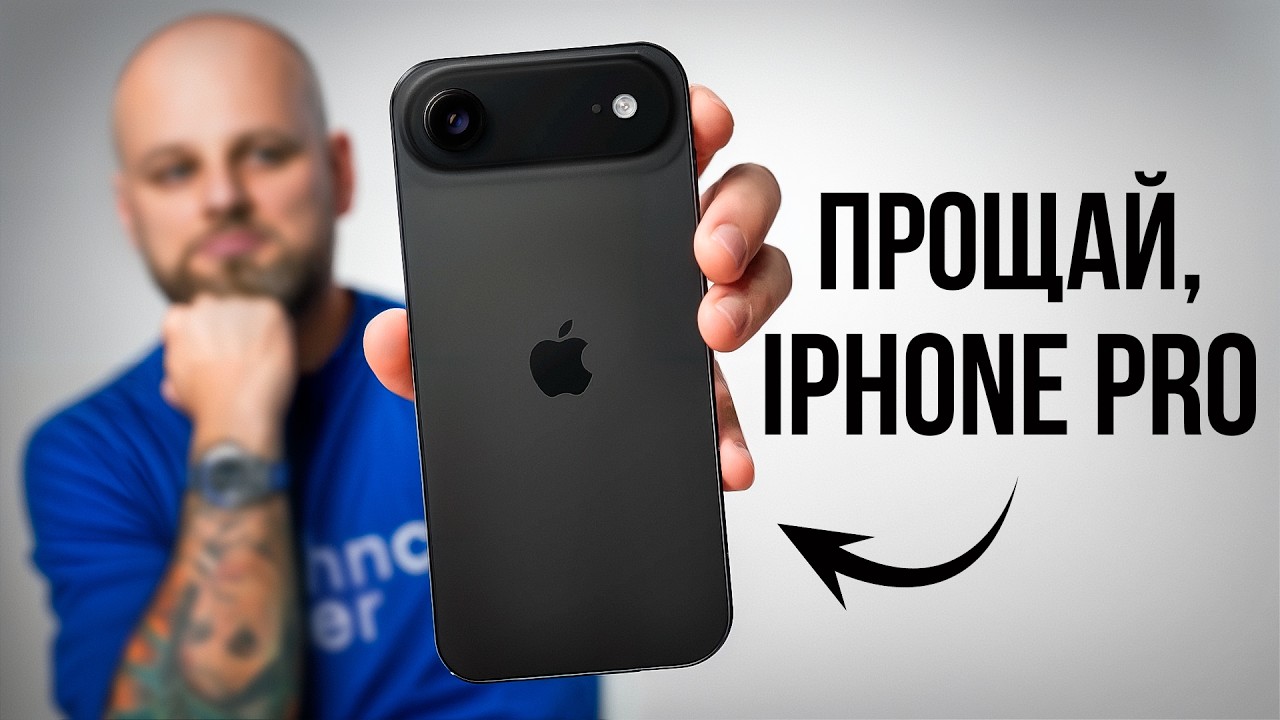
Three weeks ago, a review was published where the Techno Buyer team criticized the iPhone Air on all fronts. Glossy frame collects fingerprints. One camera is reduced functionality. Battery doesn't last a full day. The verdict was clear: an overpayment for a pretty 5.9mm number.
Then the phone continued to be used as a second device. And after three weeks, it became clear: the assessment was too hasty. Most complaints dissolved with familiarity. And the main advantage of the Air — the one that seemed like a marketing trick — turned out to be real and physically tangible.
Below is an honest reassessment. Without self-flagellation, but also without pretending everything is perfect.
Glossy Frame: Irritates for the First Three Days
Fingerprints on the glossy frame — fact. They were, are, and will be. The frame hasn't changed.
But here's what changed: after a few days, you stop noticing it. The phone becomes a familiar object — like keys or a wallet. No one looks at scratches on a keychain every half hour. With the Air, it's the same: you just pick it up and use it.
Moreover — the gloss has a real plus that isn't immediately obvious. The phone is easier to grip in your hand: it slides in the palm without resistance. The matte titanium of the iPhone 16 Pro Max, by comparison, sometimes requires effort when changing grip — the surface "catches." With the Air, that's not the case.
And another detail: the glossy frame reflects light in a way that makes the phone visually appear even thinner. In person, it looks like an intentional design decision — and it works.
Screen Scratches: The Problem Wasn't the Phone
In the first review, it was stated harshly: Ceramic Shield doesn't work, the phone scratches at every opportunity.
Then an uncomfortable truth emerged. The habit of placing the phone screen-down on any surface — a cafe table, a windowsill, a car dashboard — hadn't gone anywhere. That's what was causing the scratches. After starting to place the phone screen-up or put it in a pocket, not a single new mark appeared in three weeks.
The scratches from the first week remained. But in normal use, they're practically invisible — only if you search for them specifically under a certain angle.
For those worried: a screen protector for 30–50 AED closes the question completely. Apply it — forget about it. The iPhone Air is no different from any other iPhone in this regard: not more fragile, not more delicate, just requires minimal care.
One Camera: Unexpectedly Changes the Approach to Photography
This is the most unexpected change in assessment.
In the first days, the hand kept reaching to switch to ultrawide or telephoto. The buttons weren't there. Unfamiliar, slightly irritating.
But then something changed. Instead of standing still and tapping lenses, we started just moving. Want to capture an entire building — take a step back. Need a close-up — step closer. Looking for the angle, choosing the shooting point, thinking about the frame.
This is photography in its original sense. Three cameras breed laziness: you stand still, switch lenses without thinking about composition. One camera forces you to think — and the shots become more deliberate.
The camera itself is genuinely good. Daylight — crisp, detailed shots with accurate colors. Evening, indoors, partial shade — handles it admirably. For 95% of everyday photos — friends, food, travel, cities — this lens is more than enough.
The one exception: professional shooting or active social media where diverse content is needed. There, additional cameras would be in constant use, and their absence would show. For everyone else — one camera isn't a compromise, it's just a different shooting style.
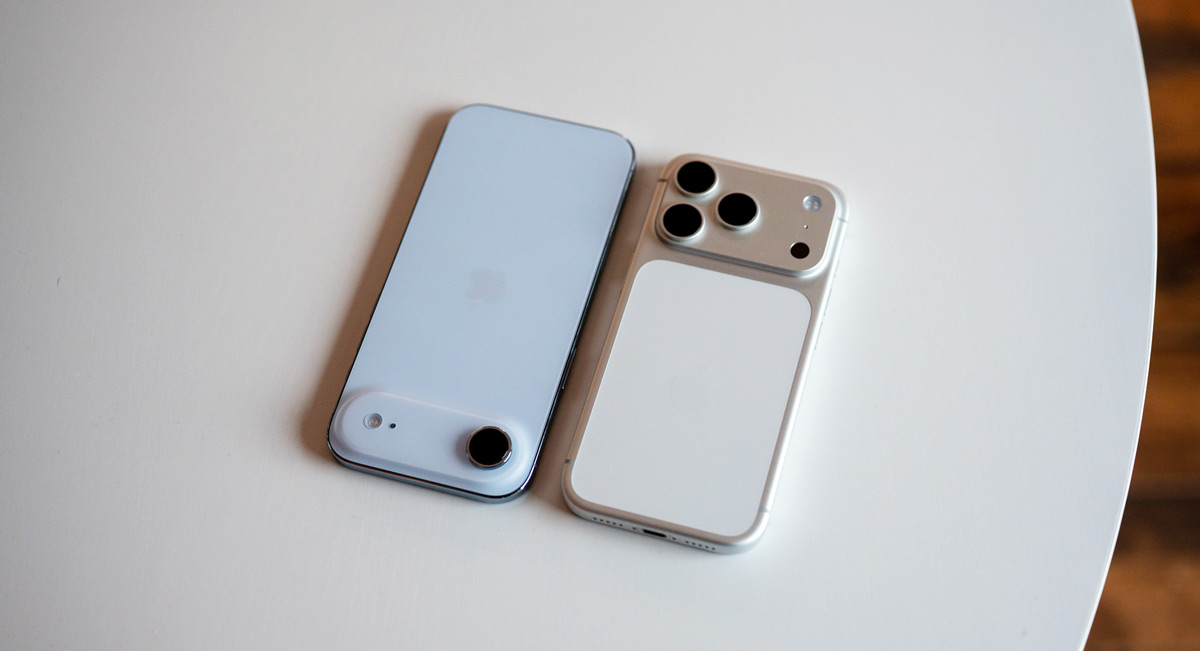
Battery: The Complaint Was Honest, but the Comparison Wasn't Fair
Here the opinion changed partially. The Air's battery is indeed smaller than one would like. That's objective — denying it would be silly.
But the original comparison was with the iPhone 16 Pro Max — one of the most long-lasting smartphones on the market. It's like evaluating a hatchback's off-road capability by comparing it to a four-wheel-drive SUV. The conclusion would be predictable — and completely meaningless.
The real picture over three weeks: a standard workday — social media in the morning, music on the go, calls and messaging, YouTube at lunch, a few posts in the evening — by end of day, 20–25% remained. Not much, but the phone survives to charging without panic.
If a heavy day is ahead — shooting, long trip, an event — take a power bank. It's not a problem if you're prepared. The problem arises when you expect Pro Max battery life from the Air and don't change your habits.
And one lifehack that changes the attitude toward the battery: stop constantly checking the charge percentage. The phone will warn you when it's critical. Anxious monitoring of the numbers only amplifies the feeling of "low battery" — even when there's objectively enough.
Thinness: It's Not Marketing, It's Physically Tangible
This is the main discovery of the three weeks. And the hardest to convey in words.
5.9mm was perceived as a pretty number for a press release. The best way to understand what it means in practice is to pick up something "normal" after the Air. The iPhone 16 Pro Max, which a month ago seemed perfectly comfortable, suddenly feels like a brick. Thick, heavy, bulky. Not because it got worse — just the perception bar shifted, and it doesn't shift back.
In a jeans pocket, the Air is barely noticeable. Doesn't pull, doesn't dig into the leg, doesn't require adjusting position while walking. With heavy flagships, the pocket constantly reminds you of itself — you notice this only when you've tried otherwise.
In the hand — a separate story. During prolonged use, the hand doesn't tire. Scrolling feeds, reading text, watching video — nothing goes numb. With heavy smartphones, after 20–30 minutes, there's a desire to put the phone down and rest the hand. With the Air, that desire isn't there.
For those who spend several hours a day with a smartphone in hand — and that's practically everyone — the difference is much more tangible than any difference in processor performance.
Price: Now the Math Is Different
In the first review, the question was fair: why does a phone with one camera and a smaller battery cost the same as an iPhone 17?
The situation has changed. Prices have leveled out, and currently the iPhone Air in the Techno Buyer catalog costs around 2,800 AED — at or even below the base iPhone 17.
For that money, you're buying a unique form factor: Apple solved a real engineering challenge, fitting into 5.9mm a phone that doesn't overheat under load and doesn't bend in a pocket. This isn't just "thin" — it's a separate engineering story. When the price was inflated, the argument "overpaying for form factor" worked. Now it's moot.
Who Should Get It, and Who Shouldn't
The iPhone Air is suitable if:
- Maximum lightness and minimum weight in daily carry matters to you
- You don't actively use zoom and ultrawide
- Your workday doesn't involve extreme battery demands
- Design and the feel of the device in hand matter to you
You should choose a Pro model if:
- Ultrawide and telephoto are needed regularly — for content, travel, event shooting
- A long workday without access to charging is the norm, not an exception
- You need the most versatile smartphone without adapting habits
The Bottom Line
The initial assessment of the iPhone Air was made too quickly. Most complaints turned out not to be device problems, but problems of the adaptation period — when the brain automatically compares the new with the familiar and perceives any difference as a drawback.
Three weeks of real use gave a different picture. The Air isn't a universal flagship — and doesn't pretend to be. It's a smartphone with a specific philosophy: minimum weight, maximum in-hand comfort, a deliberate rejection of excess. For those to whom this matters, it works exactly as promised.
You can check current prices and availability of the iPhone Air in the Techno Buyer catalog.
0 comments